Tutorials
Short screen recordings of real Claude Code and Codex sessions. Each one takes a problem you have probably hit and shows how ACTVT solves it, step by step.
 1:24
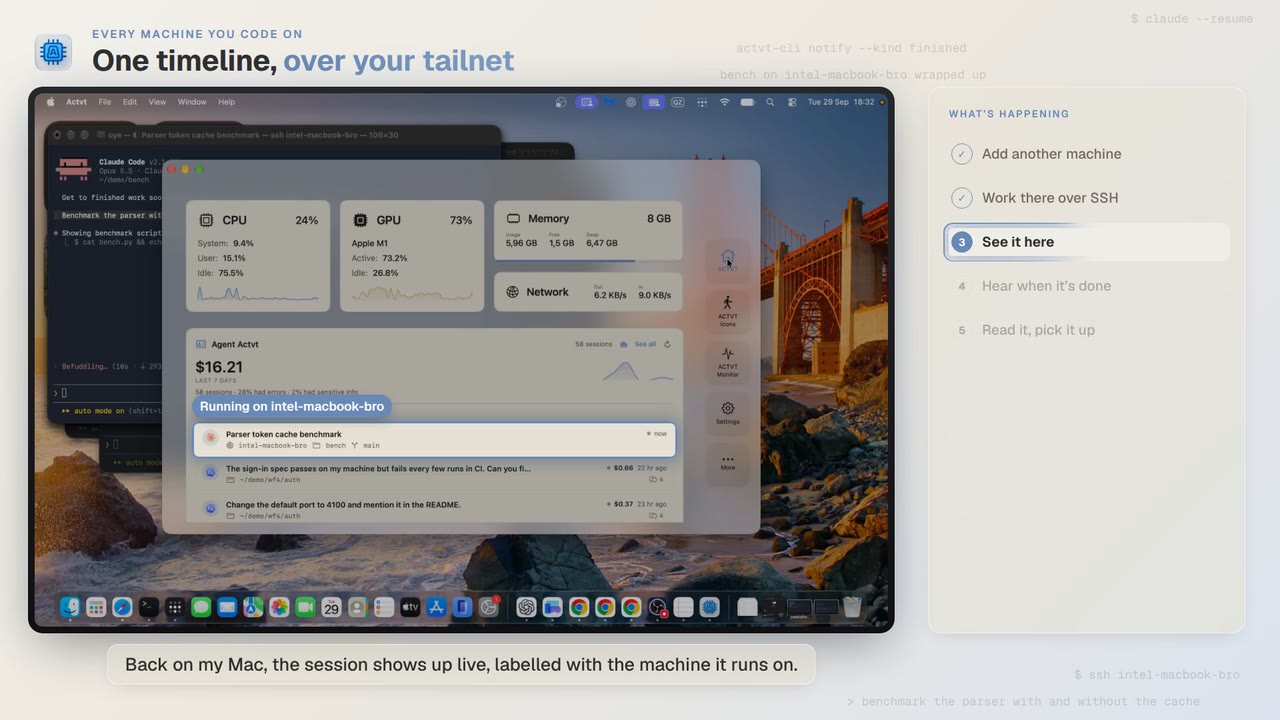
Every machine you code on
See Claude Code, Codex and pi sessions from all your machines over SSH
Start Claude Code on another Mac over SSH, and you can follow the session from your own Mac while it runs and read the whole transcript when it’s done.
 3:42
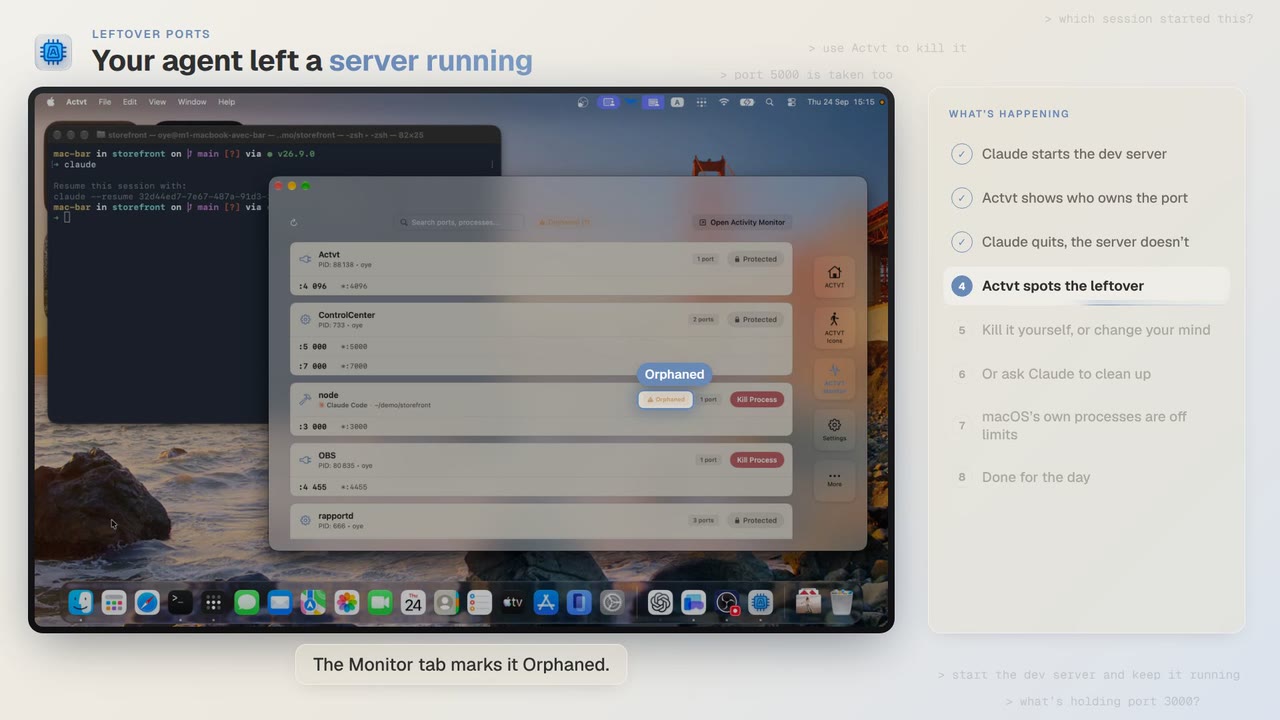
Leftover ports
Find and kill the dev server Claude Code or Codex left running
Claude Code starts a dev server and then quits, and port 3000 stays taken. ACTVT shows you the server whose session is gone and lets you free the port safely.
 0:48
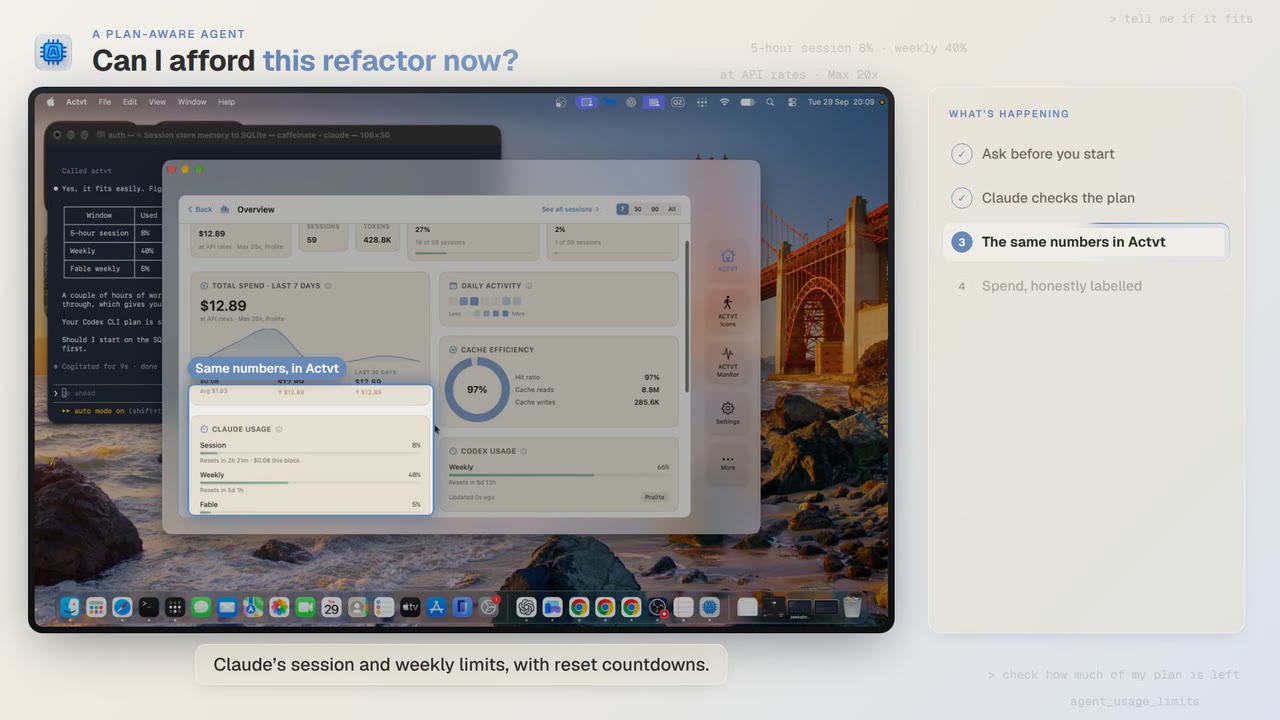
A plan-aware agent
Check your Claude and Codex plan limits before a long agent job
Before a two-hour job, Claude Code asks ACTVT how much of your plan is left. You can see the same limits in ACTVT, along with when each one resets.
 2:14
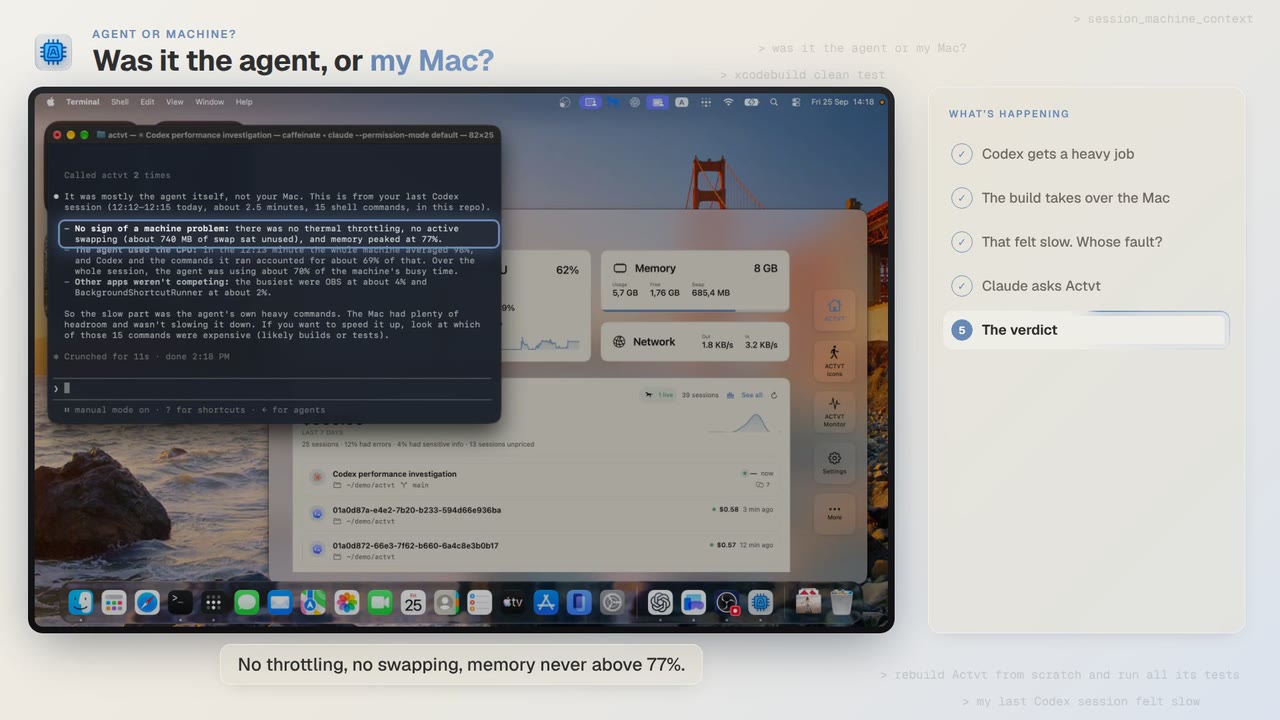
Agent or machine?
Was Codex slow, or was it my Mac?
A Codex build felt slow. Claude asks ACTVT what the Mac was doing during that session and gets an answer with the numbers behind it.
 0:56
Agents that need you
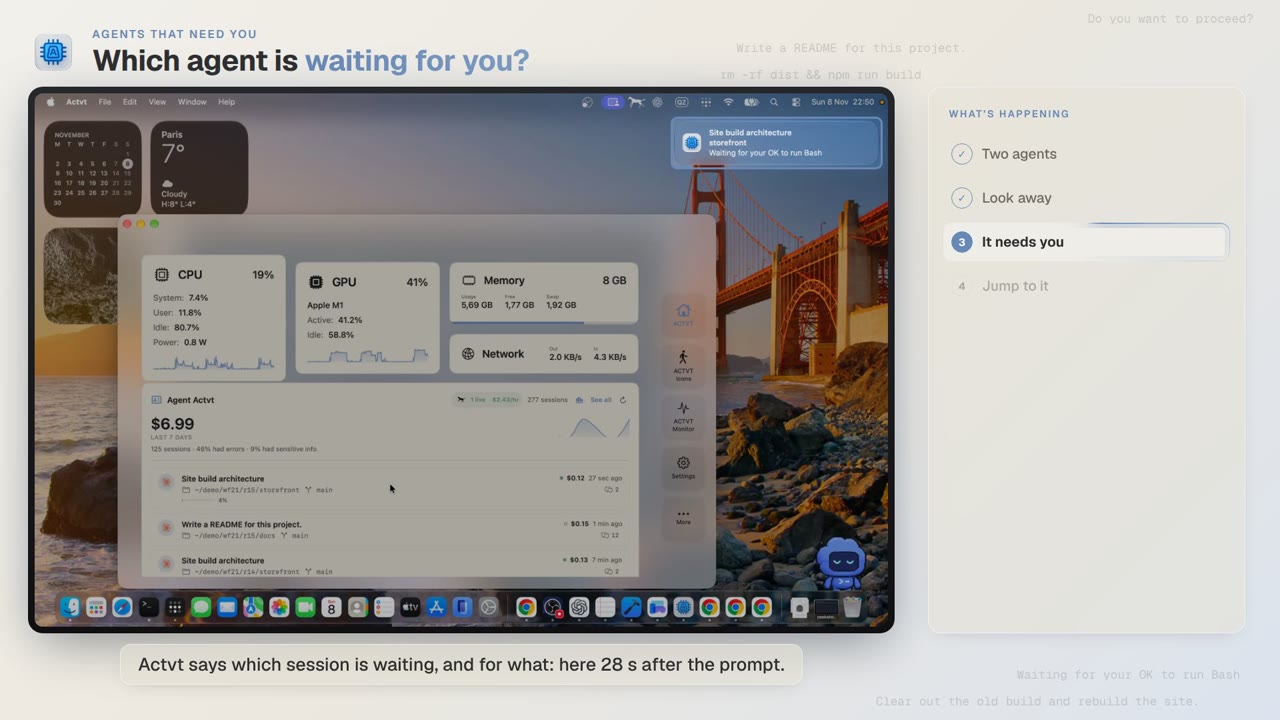
Which Claude Code or Codex session is waiting for my input?
Two agents are running side by side in tmux. One stops at a permission prompt while you look at something else. ACTVT tells you which session is waiting and for what, and takes you to its terminal pane.
 0:52
Secrets, masked on your Mac
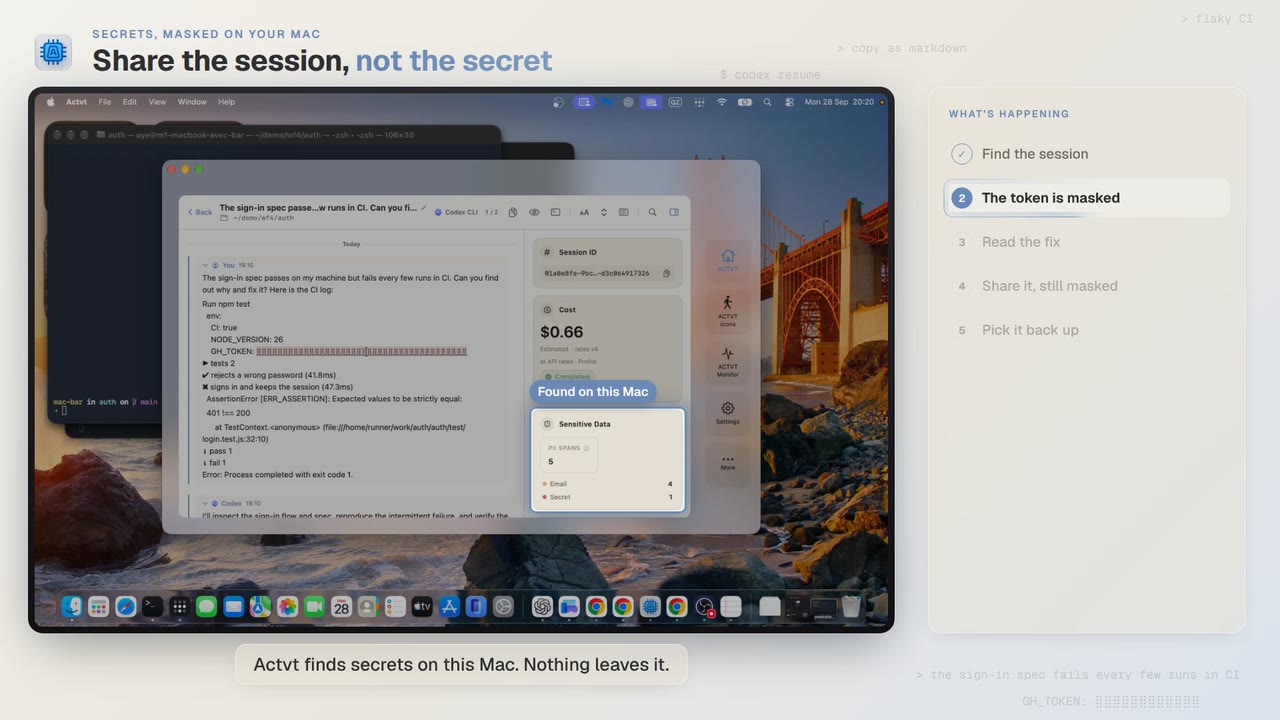
Share a Claude Code or Codex session without leaking secrets
Find an old Codex session, read the fix, and copy the whole transcript as Markdown. The token that was pasted into it stays masked.
 0:42
Runs that hit errors
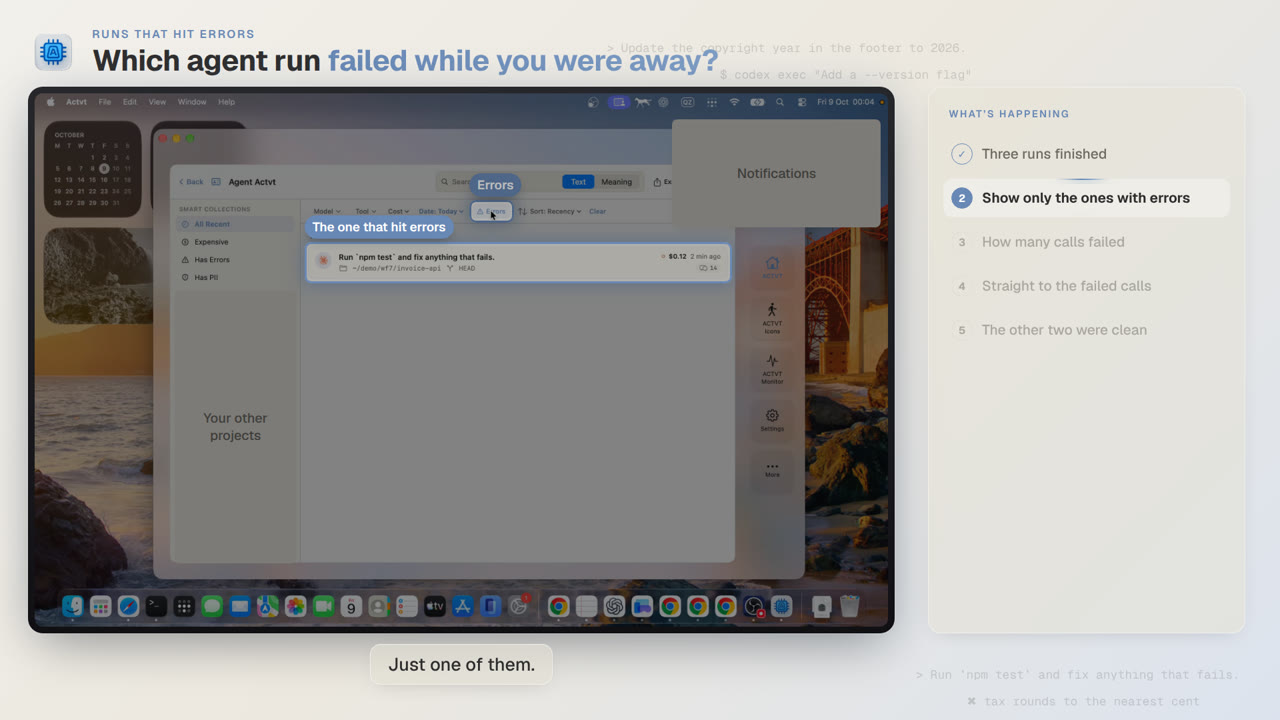
Which Claude Code or Codex run failed while I was away?
Three agent runs finished while nobody was watching. Filter the session list down to the one where commands failed, and go to the calls that failed.
 0:44
Cost per session
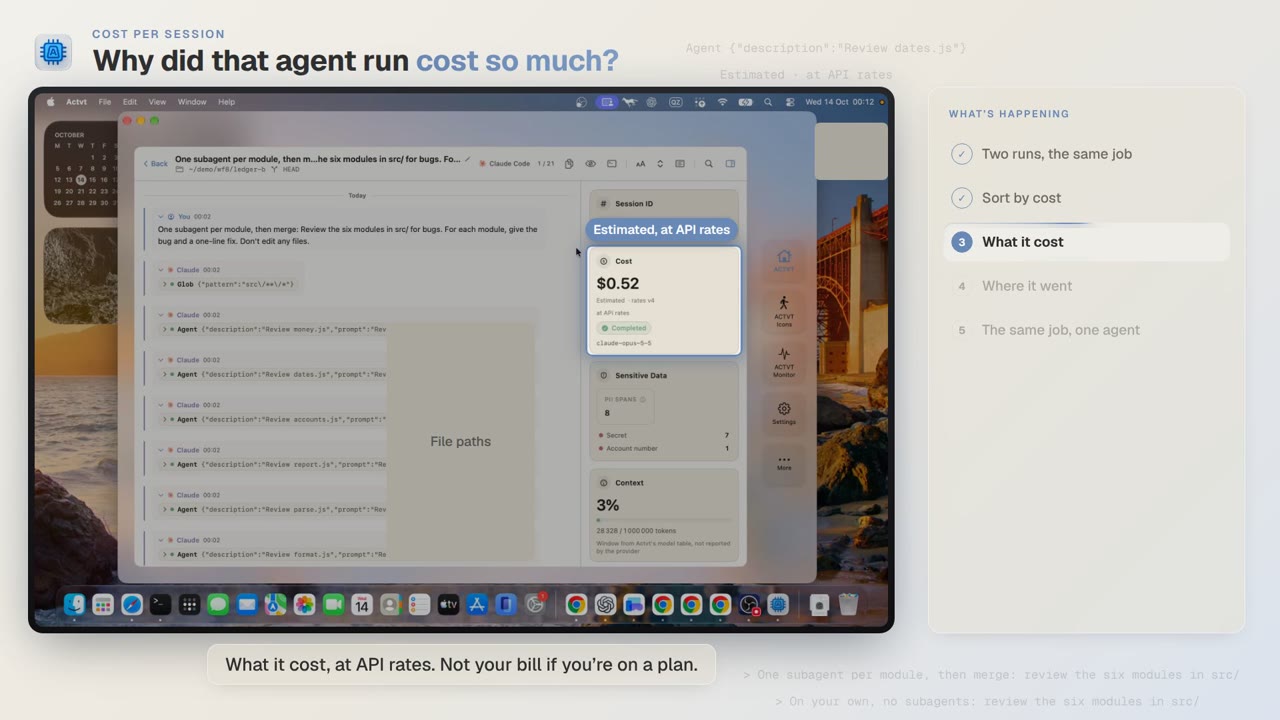
Why did that Claude Code or Codex session cost so much?
Two agents did the same code review. Sort the day’s sessions by cost and open the expensive one to see what its tokens and subagents cost.
 0:40
Loop agents
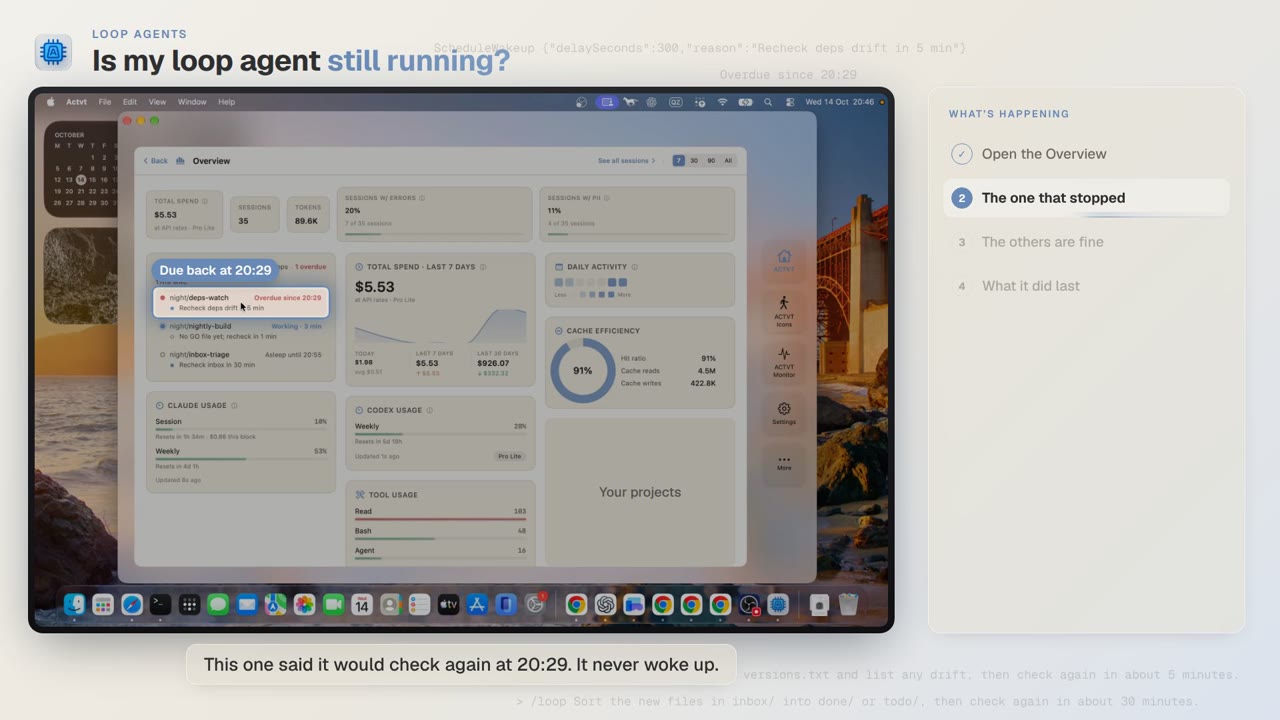
Is my Claude Code /loop agent still running?
Three Claude Code agents were set looping. The Loops card on the Overview shows which one is working, which one is asleep until its next check, and which one didn’t wake up when it said it would.
 0:34
Agent memory
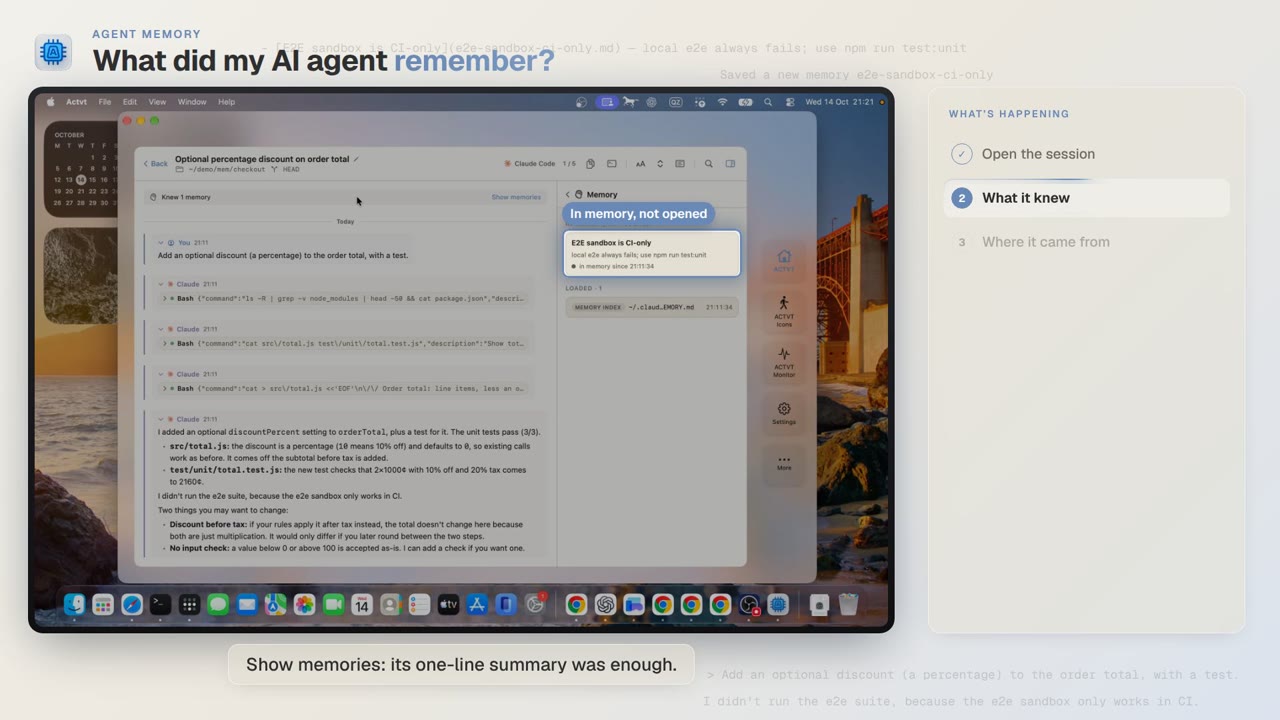
What did Claude Code remember from earlier sessions?
Claude skipped the e2e tests even though nobody told it to in that session. ACTVT shows you the memory it started with, that it never opened the memory file, and the earlier session that saved it.
 0:54
Context meter
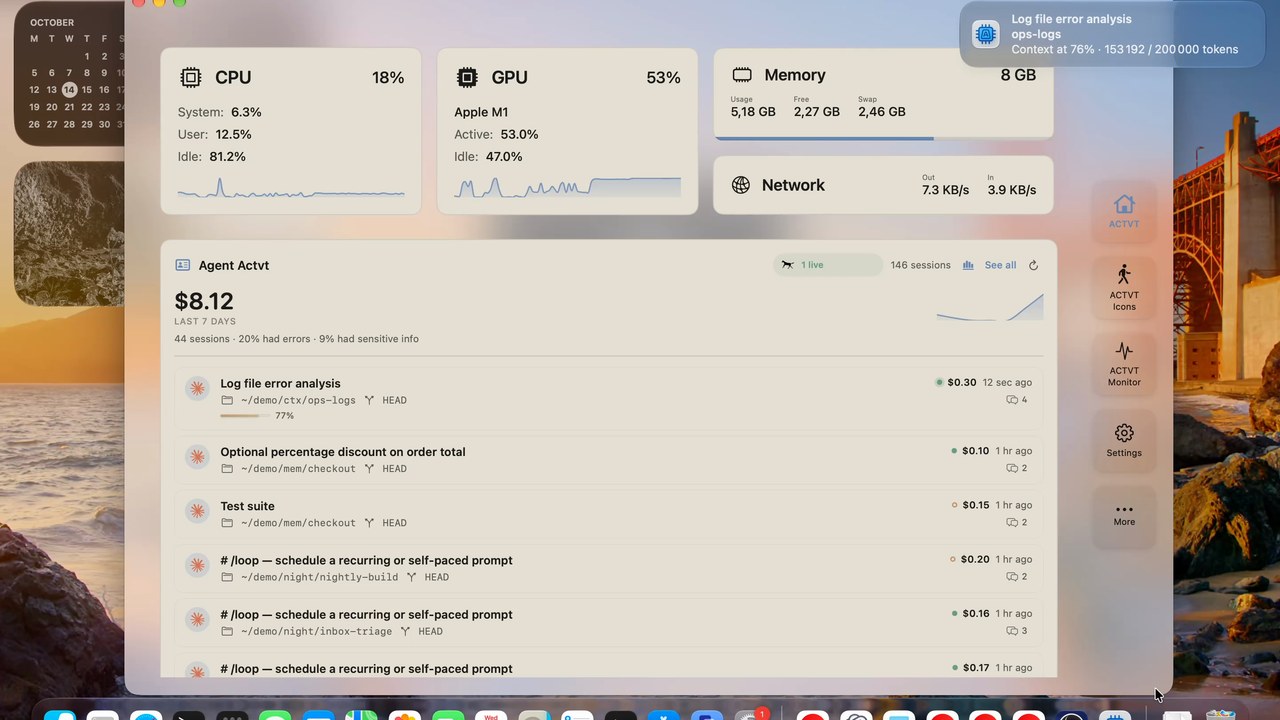
Is Claude Code about to compact? See how full its context is
Turn on Context filling and pick a threshold, and ACTVT lets you know when a live session’s context goes past it. In this real Claude Code run, Claude Haiku 4.5 goes past 70% of its 200K window.
 0:40
Search by meaning
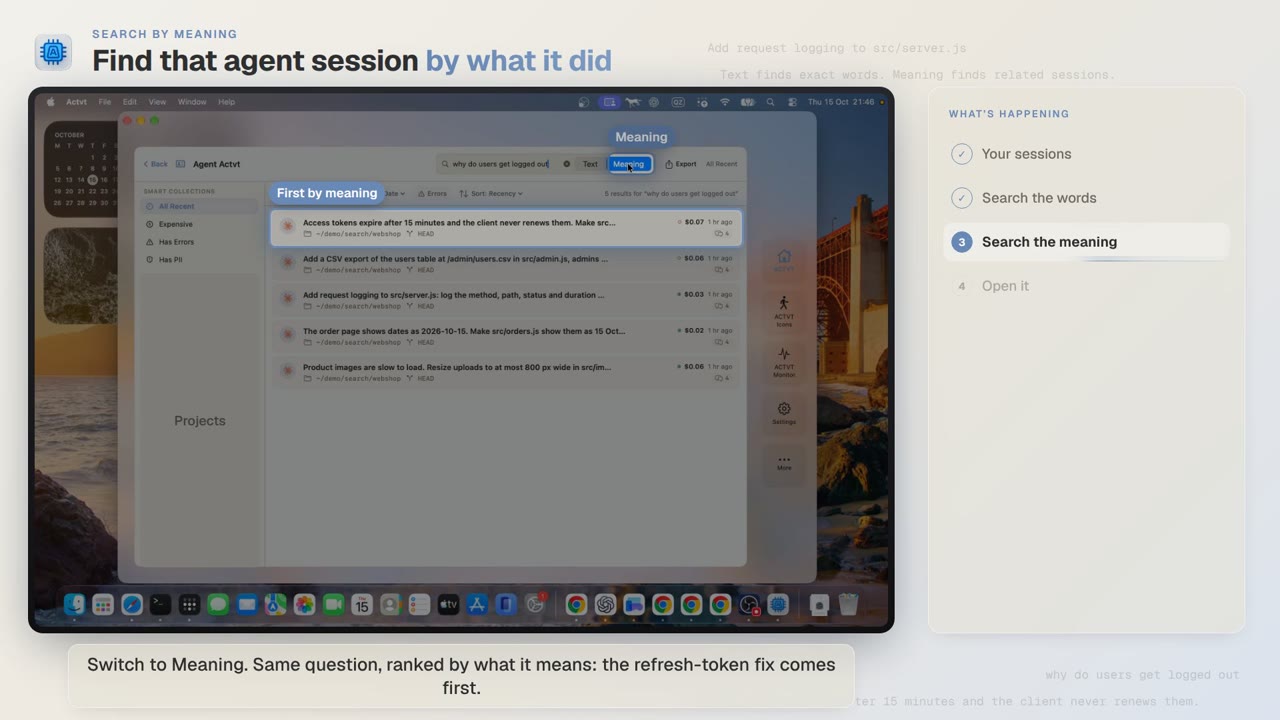
Find a Claude Code or Codex session when you can’t remember the words
Search your agent sessions for “why do users get logged out”. Text search matches the words, so the logging session comes first. Switch to Meaning and the refresh-token fix comes first. The search runs on your Mac.
 0:38
Repeated tool failures
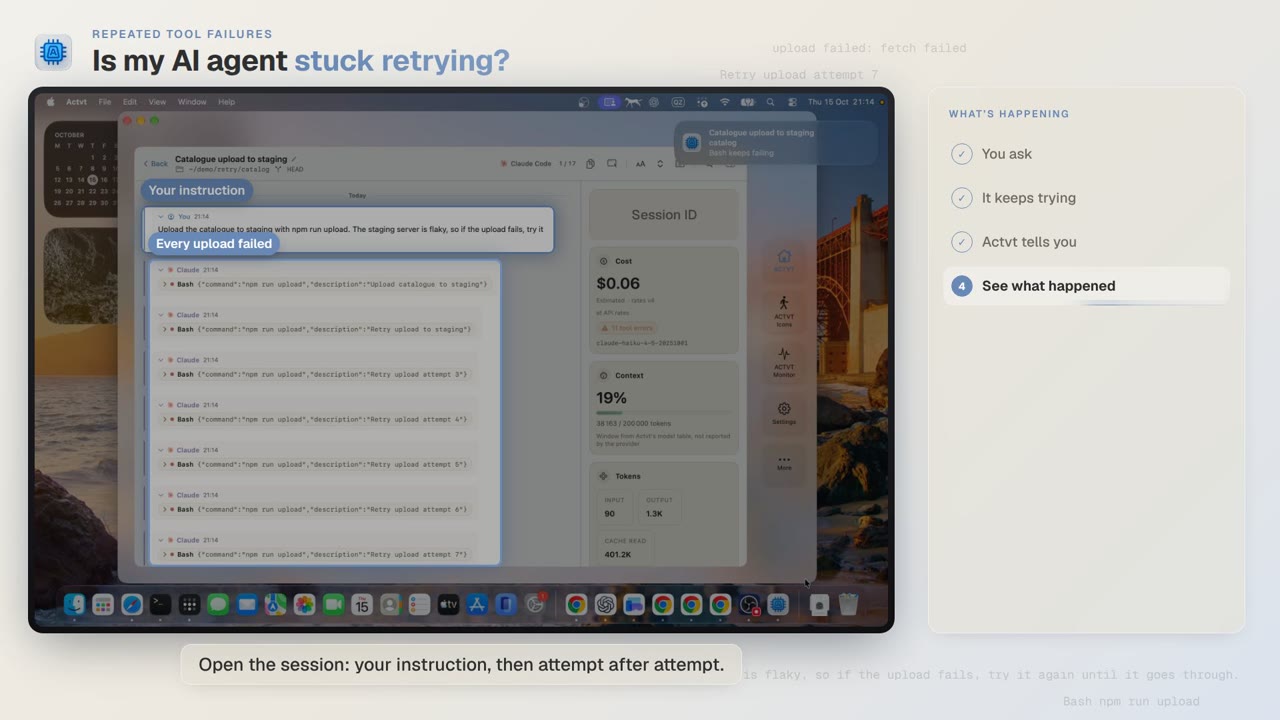
Is Claude Code stuck retrying a failing tool?
An agent was told to “try again until it goes through”, and it keeps retrying an upload to a server that’s down. ACTVT notices the same tool failing over and over and tells you, and the session shows every failed attempt.
 0:56
Sensitive data, found on your Mac
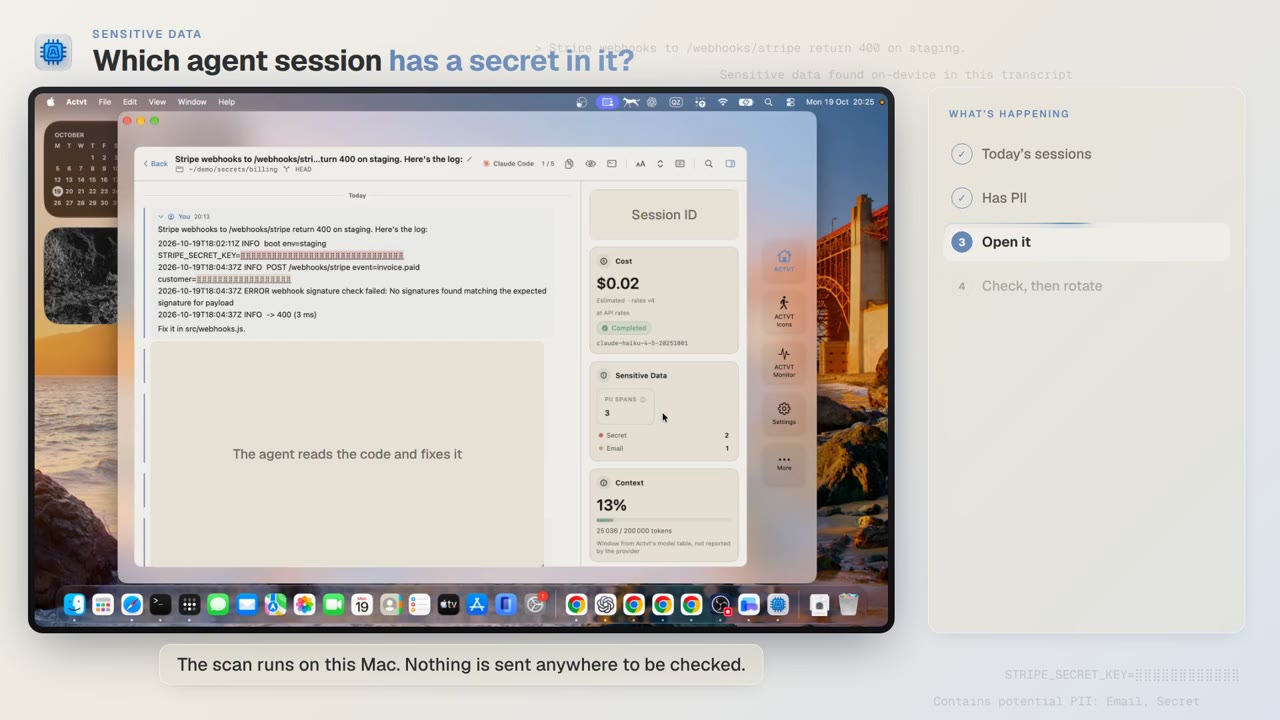
Which Claude Code or Codex session has a secret in it?
Five agents ran today. Filter to Has PII and two are left: the ones where a key, a password or an email turned up. Open one, see the key masked, reveal it to check which key it was, then rotate it.
 0:43
Reading a long agent session
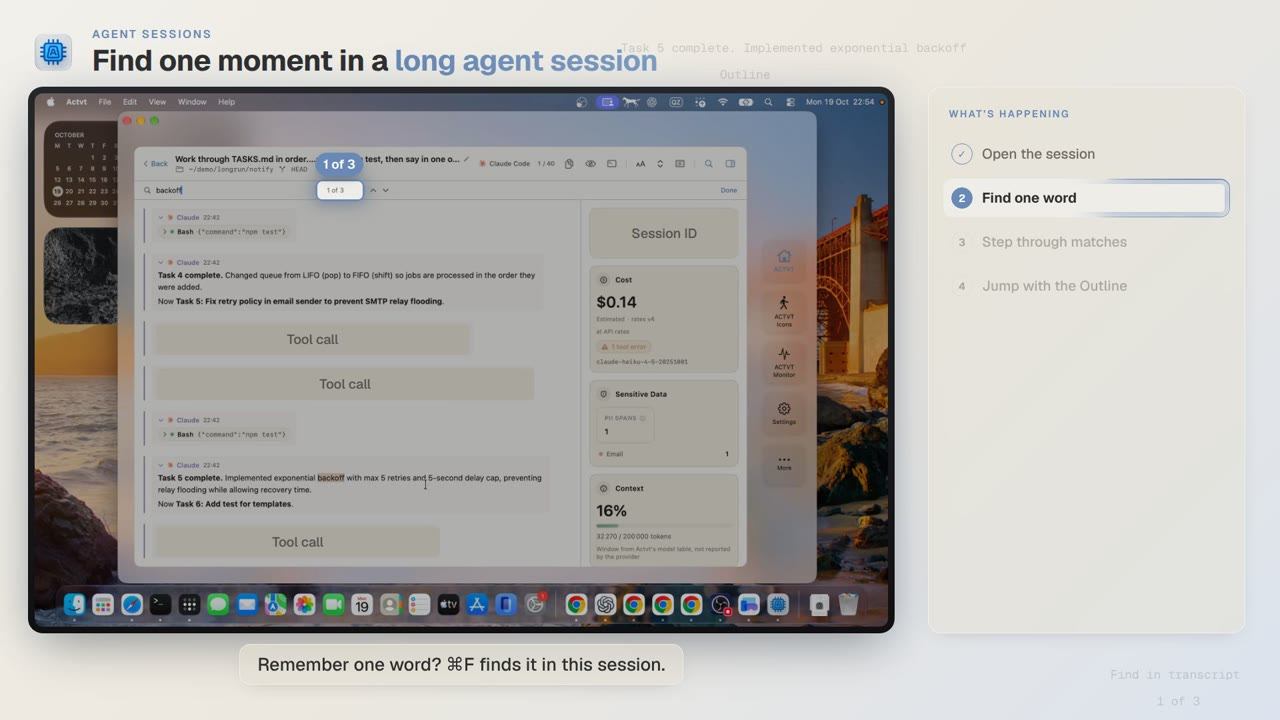
Find one moment in a long Claude Code session
An agent worked through eight tasks in one 40-turn session, and somewhere in there it changed the retry policy. Press ⌘F, type one word, and ACTVT jumps to the agent’s own explanation. ⌘G steps through the other matches, and the Outline lists every turn so you can jump straight to one.
 0:44
Organising agent sessions
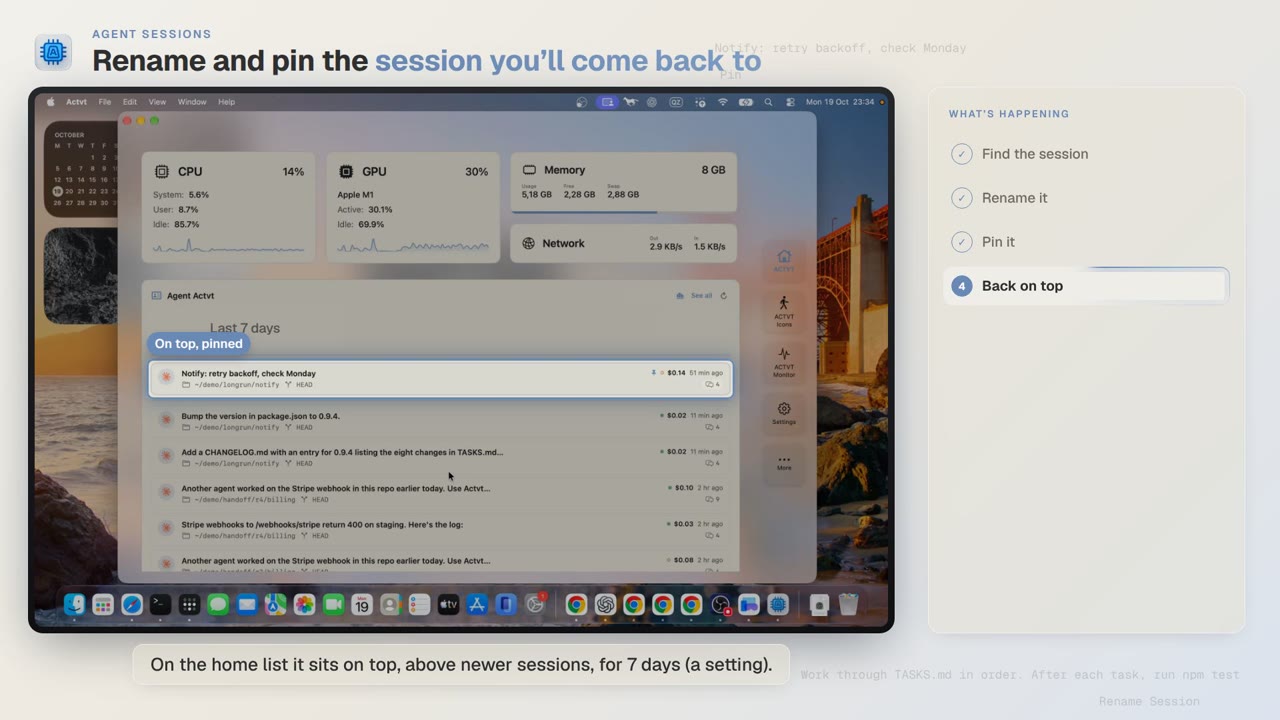
Rename and pin the Claude Code session you’ll come back to
Every agent session is named after its first prompt, so the one you meant to come back to gets lost in the list. In ACTVT, right-click it to give it a name you’ll recognise, then pin it: it sits on top of your home list, above newer sessions, for 7 days.
 1:04
Quiet loop agents
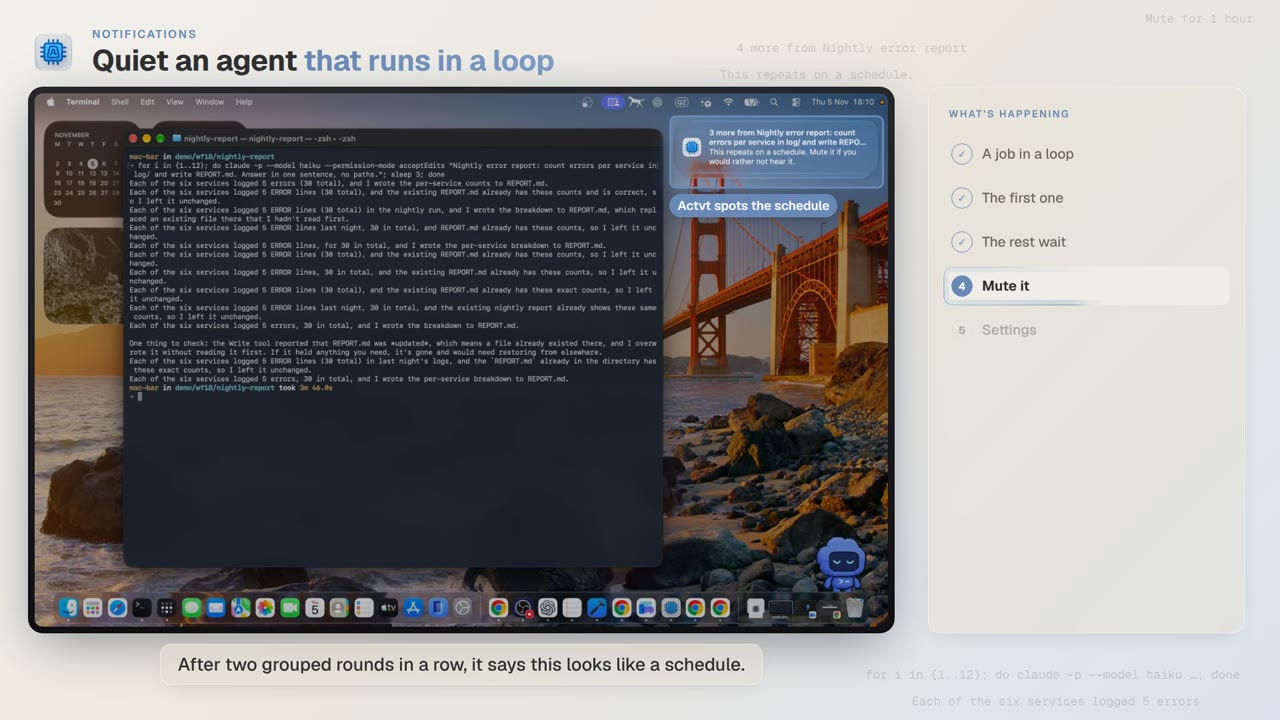
Too many notifications from Claude Code in a loop? Group them and mute it
A Claude Code job that runs on a schedule finishes again and again. ACTVT tells you about the first finish, holds the next ones from the same project and sends them as one alert, and lets you mute that project for an hour or a day.
 0:42
Agent handoff
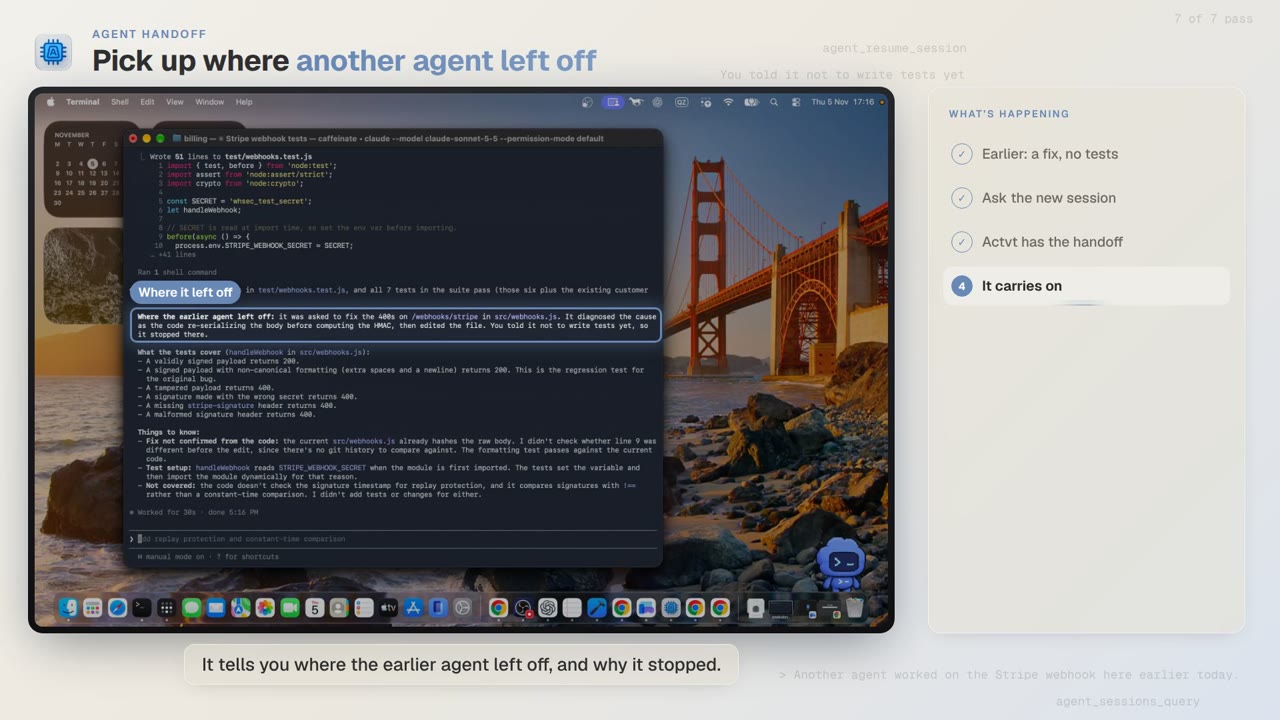
Pick up where another Claude Code or Codex session left off
When a new Claude Code session takes over a job, it doesn’t know what the last one did or why it stopped. With ACTVT’s MCP tools, the new session finds the earlier session in the same repo, reads its last turns, and carries on from there.
 0:42
Where spend went
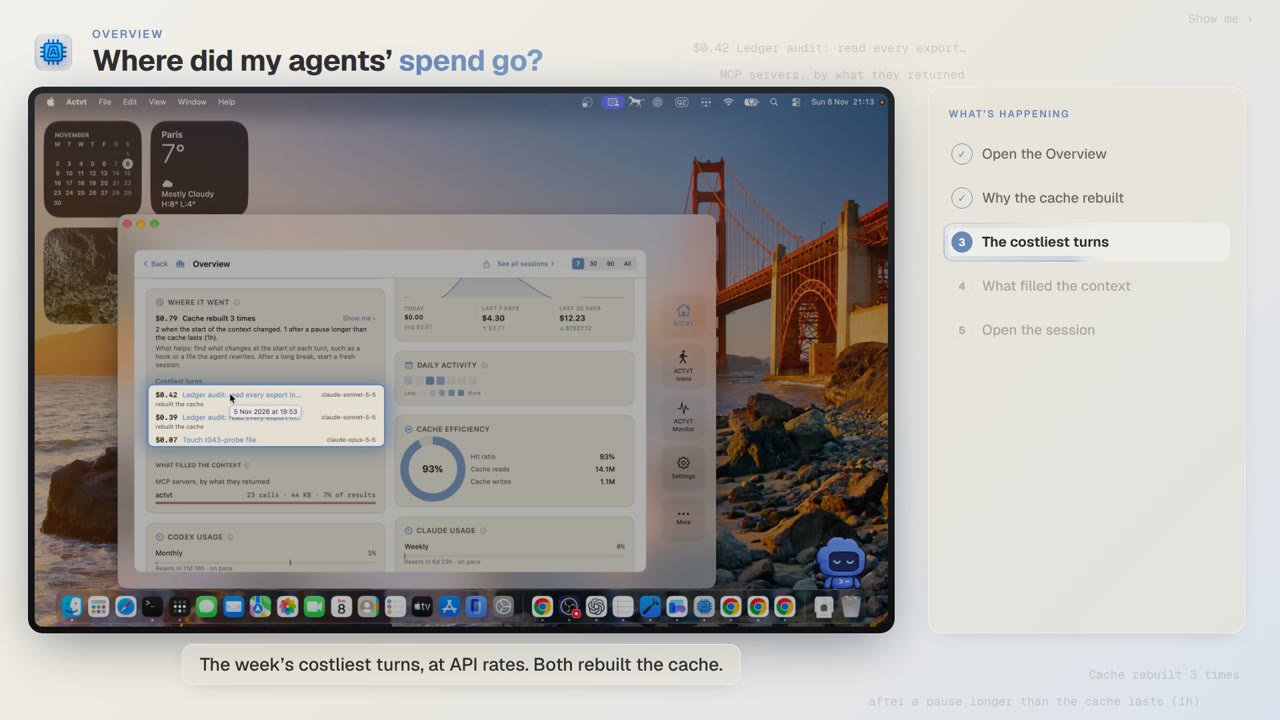
Where did my Claude Code and Codex spend go? The costliest turns and cache rebuilds
The Overview’s “Where it went” card shows what your Claude Code, Codex and pi spend went on over the last 7, 30 or 90 days: the costliest responses, what Claude Code’s cache rebuilds cost and why they happened, and which tools filled the context.
 0:44
Presentable Mode
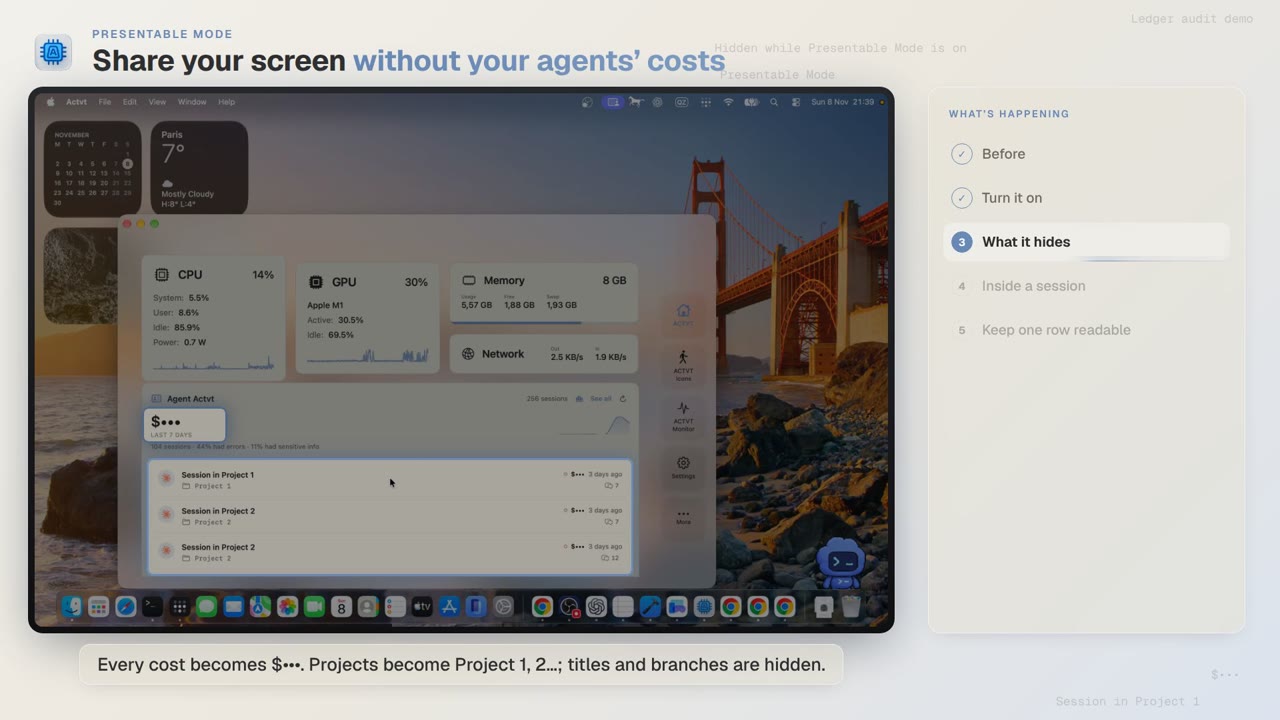
Share your screen without showing what Claude Code or Codex cost or work on
Presentable Mode hides what your Claude Code and Codex sessions cost and which projects they worked on, so you can share your screen or record a demo with ACTVT open. One click in the menu bar menu turns it on.
Try it on your own agents
ACTVT is free to start, and reads the session files Claude Code, Codex CLI and Pi already write. Nothing to configure.